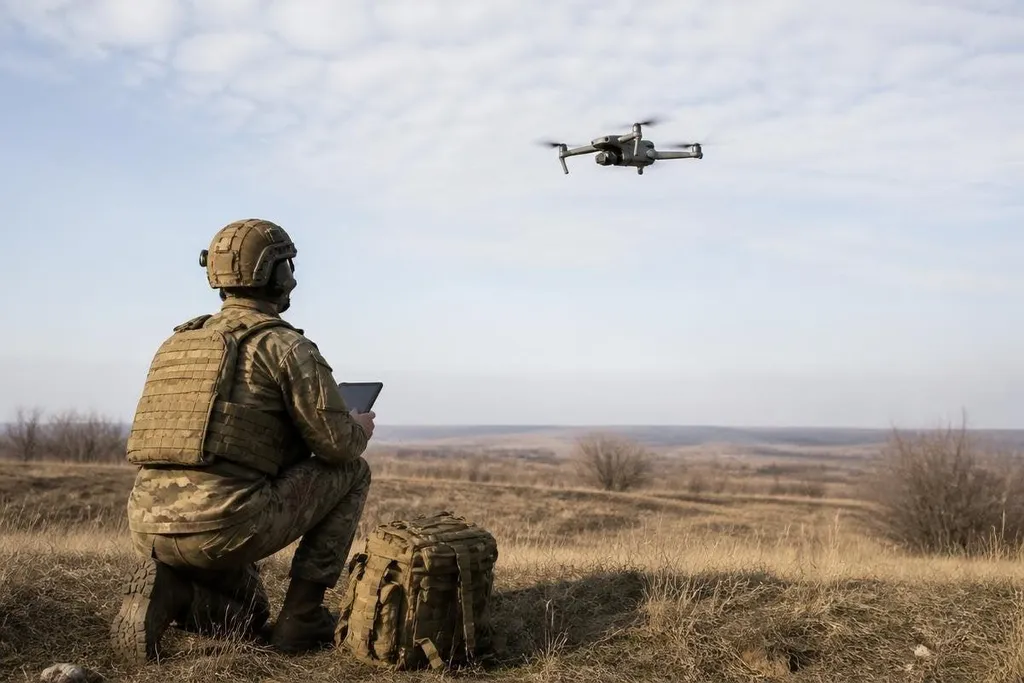
A drone can put a camera, radio, or weapon closer to danger without placing a pilot in the same aircraft. That changes how forces gather information, move supplies, and decide when to use force.
- Small airframes can watch areas that are hard or risky for people to reach.
- Radio links can fail when buildings, terrain, weather, or jamming block the signal.
- Human review still matters when a drone finds a target or carries a weapon.
More eyes over the same area
The first change may come from sensing. An aircraft can carry a camera over a road, field, or damaged building, then send images to people away from the scene. That gives a unit a wider view before it moves.
The value depends on what happens after the image arrives. A clear video feed does not make the decision for a commander. People still need to identify objects, judge intent, and act within the rules of armed conflict.
Drones can also watch an area for longer than a person standing at a fixed post. Their flight time, battery size, weather limits, and need for a safe launch point still set the practical limit. A drone that must return often leaves gaps in coverage.
The fight moves into the radio link
A remote aircraft depends on communication. The control station sends flight commands, while the drone sends back video, location data, and system warnings. If that link breaks, the drone needs a preset response such as hovering, returning, or landing.
Jamming attacks can interfere with satellite navigation or the radio channel. Terrain can do the same thing without an enemy transmitter. A valley, dense city, or underground site can make a small aircraft hard to control from a distance.
That makes electronic warfare part of drone defense. Units may need alternate radio paths, navigation methods that do not rely on one signal, and plans for a lost link. The software can help the aircraft keep flying, but it cannot remove the physical limits of radio transmission.
One drone may carry a camera while relaying signals, putting more work on its battery, radio link, and operator. A dated report at Robot 24 can place that added task beside the test setting and control method. Each new job gives the aircraft another way to fail.
More tasks, more ways to fail
One aircraft may carry a camera on one mission and supplies on another. A larger aircraft may carry a heavier payload, but it also needs more power and may be easier to detect. A smaller aircraft costs less to lose, yet it cannot carry the same sensor or travel the same distance.
Resupply is one practical use. This kind of aircraft can move food, batteries, medicine, or spare parts across a route that exposes a truck or helicopter crew to danger. The route still needs planning, and the aircraft must avoid obstacles, land safely, and reach the right person.
Armed drones raise a harder problem. A sensor can find a likely target, but a person must check the information and decide whether an attack is lawful. A mistaken location, old image, or civilian object can turn a technical failure into a human one.
What stays unproven
Public demonstrations often show a clean flight, a clear target, or a successful delivery. They may not show poor weather, blocked signals, battery wear, damaged sensors, or the work needed to maintain a fleet.
The cost of the drone is only one part of the system. Operators need training, spare batteries, launch equipment, software updates, secure communications, and recovery plans. A force that buys aircraft without these parts may have machines but little useful coverage.
Future conflicts may also see larger numbers of small drones working together. That could force units to spread out, hide better, and protect their radio networks.
The open question is how well people can sort useful information from a constant stream of video and alerts.
A practical test for new drone claims
Before accepting a claim about a defense drone, check:
- Mission: Does it watch, carry, relay signals, or attack?
- Control: What does it do after losing its radio or navigation link?
- Payload: How much weight can it carry, and for how long?
- Conditions: Has it worked in wind, rain, darkness, or a blocked signal area?
- Support: Who trains operators, repairs aircraft, and supplies batteries?
I’d judge a defense drone by the work it completes after the first flight, not by a polished demonstration.
The next useful measure will be simple: how often a drone completes its assigned task when the link is weak, the weather turns poor, and the people on the ground have less information than the screen suggests.